

CUSTOM DEVELOPMENT / REQUIREMENTS FIRST
Custom website development.
Built for your requirements.
When a standard website cannot support the way your business works, start with the requirement. Webinnovators plans and develops custom websites and applicable web applications for businesses in India and worldwide.
Based in Kolkata, India. Working with businesses across India and worldwide.
01 / THE RIGHT FIT
Make the case for custom before making the build.
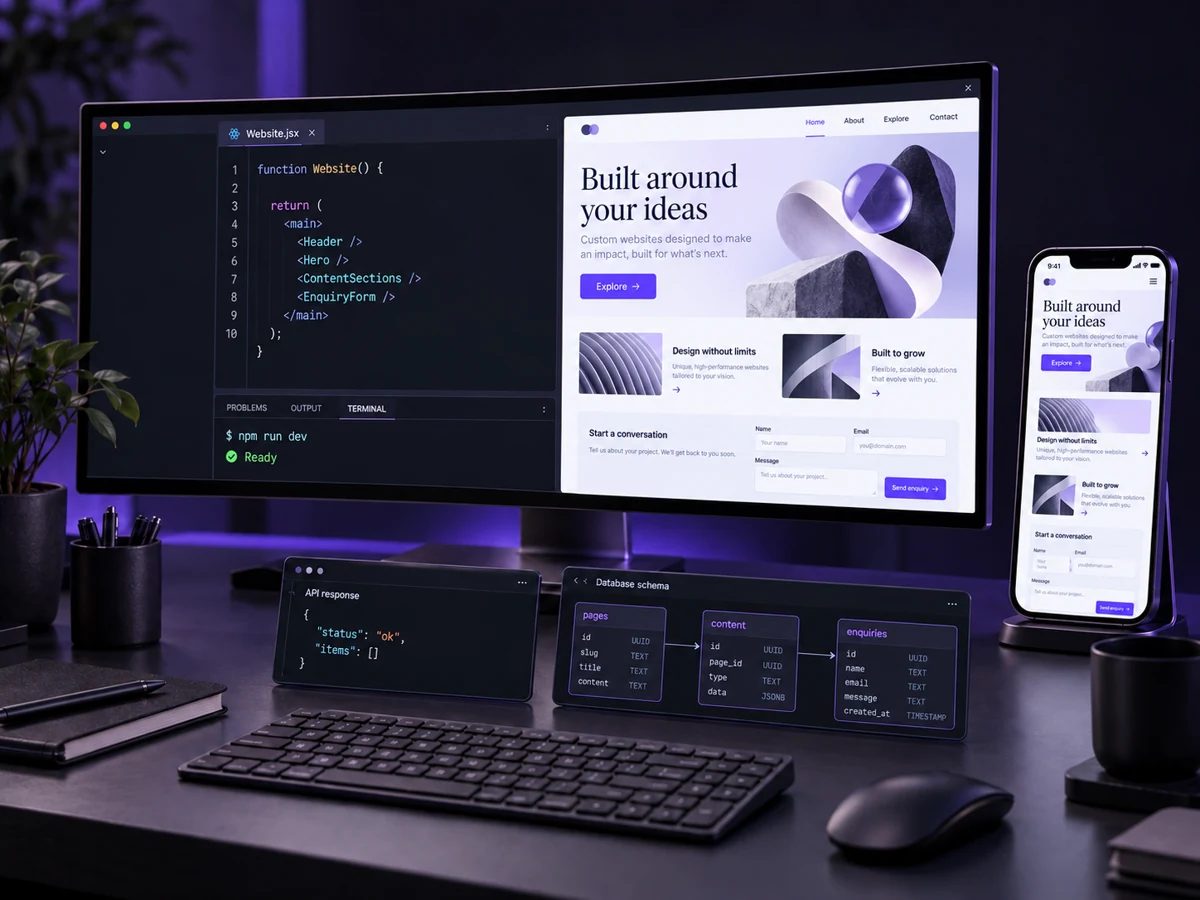
A bespoke website may be appropriate for a distinctive presentation or a specific customer journey. A web application may be needed for a workflow with roles, data or connected systems. If a standard CMS already meets the requirement, custom development may add unnecessary cost and maintenance. Discovery should make that trade-off clear.
Custom website development creates a website around specific design, content or functional requirements. It can involve bespoke interfaces and application workflows, with the technology and development scope selected after assessing the business need.
02 / WHAT WE CAN BUILD
What your project can cover
Deliverables are selected for your requirements and agreed in the proposal. The items below are not automatically included in every project.
01
Requirements definition
Translate business tasks into an agreed feature list, priorities and acceptance criteria. Identify what must be delivered at launch and what can wait.
02
Information and interface design
Plan the sitemap or application screens around user tasks. Design the paths for viewing information, submitting requests or completing agreed actions.
03
Responsive development
Build the agreed interface and behaviour for relevant devices and browsers. Choose implementation tools based on the project rather than a fixed stack.
04
Data and roles, when required
Assess content models, user access and administrative requirements. Authentication and sensitive-data needs require explicit technical and security scope.
05
Integrations, when required
Review third-party documentation, access, limits and ongoing costs before including a connection. Integration feasibility is confirmed before delivery commitments.
06
Testing and handover
Validate agreed behaviours, error states and deployment requirements. Discuss documentation, ownership, access and ongoing support as part of the proposal.
Technology chosen for the task
Frontend, backend and data tools selected around your interface, functionality and long-term support needs. Your project uses only the technologies its scope requires.
Frontend & user interfaces
React for interactive interfaces, with HTML, CSS and JavaScript for page structure, styling and behaviour.
Backend & databases
PHP, Node.js, Laravel and MySQL where the agreed application logic, data and integration requirements call for them.
DESIGNED AROUND THE USER
One clear journey. Across every screen.
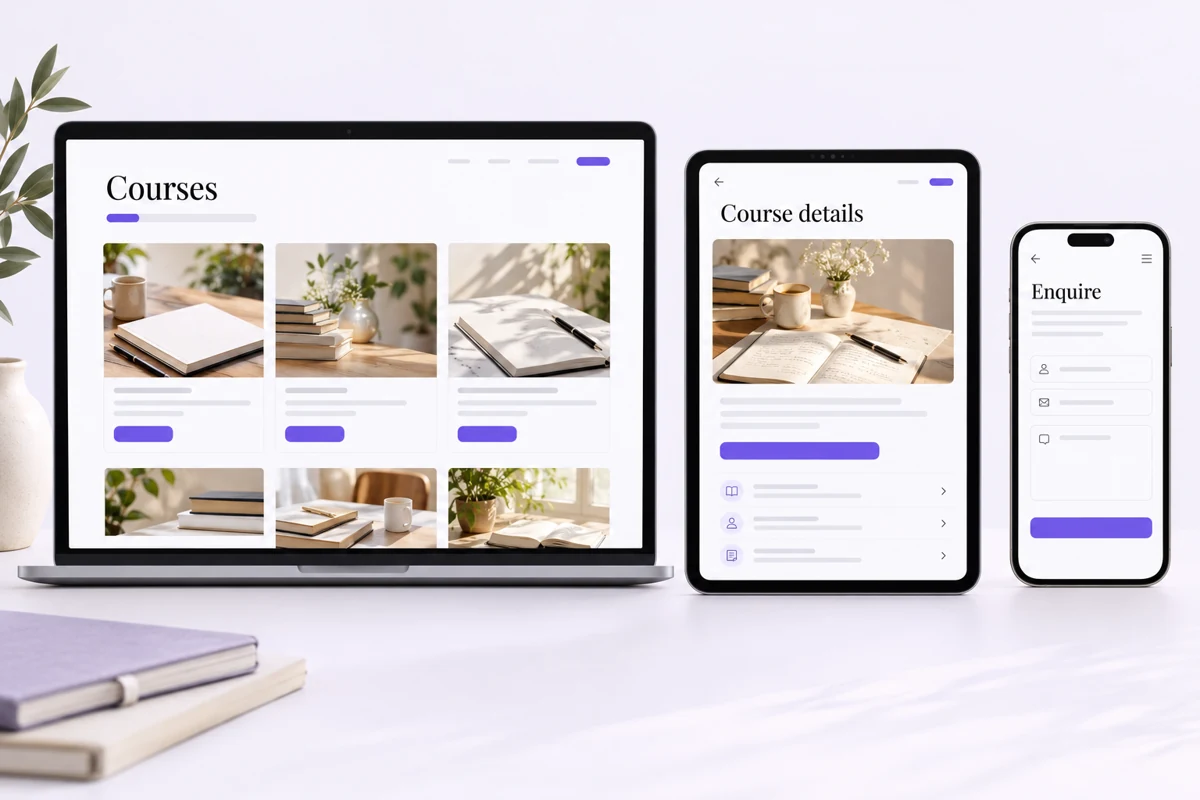
A custom interface should make the next step easy to understand. Plan how visitors explore your offer, find the right information and submit an enquiry, then adapt that journey for desktop, tablet and mobile.
For a coaching business, that may mean moving from course discovery to course details and an admissions enquiry. Your project starts with your own users and tasks.
03 / MAKE AN INFORMED CHOICE
A website and a web application solve different problems.
| Approach | Best suited to | Decision to make |
|---|---|---|
| Custom presentation website | Distinct design or content requirements | Focus on page experience, content structure and editing needs. |
| Web application | Users completing specific tasks with data or roles | Define workflows, validation, security, administration and acceptance criteria. |
| CMS-based website | Regular content publishing with standard functionality | Compare a WordPress approach before committing to bespoke development. |
04 / FROM BRIEF TO DELIVERY
A clear process, adapted to your project.
Understand the task
Identify users, goals, constraints, data and systems involved.
Define the release
Agree priority features, screen flows, technical approach and acceptance criteria.
Build in reviewable stages
Develop the approved scope and review working features against the requirements.
Validate and hand over
Test the agreed workflows, prepare deployment and define post-launch responsibilities.
The sequence and review points depend on the agreed scope. Timeline and post-launch support are confirmed in your proposal.
CONNECTED TO YOUR OPERATIONS
Connect the interface to the work behind it.
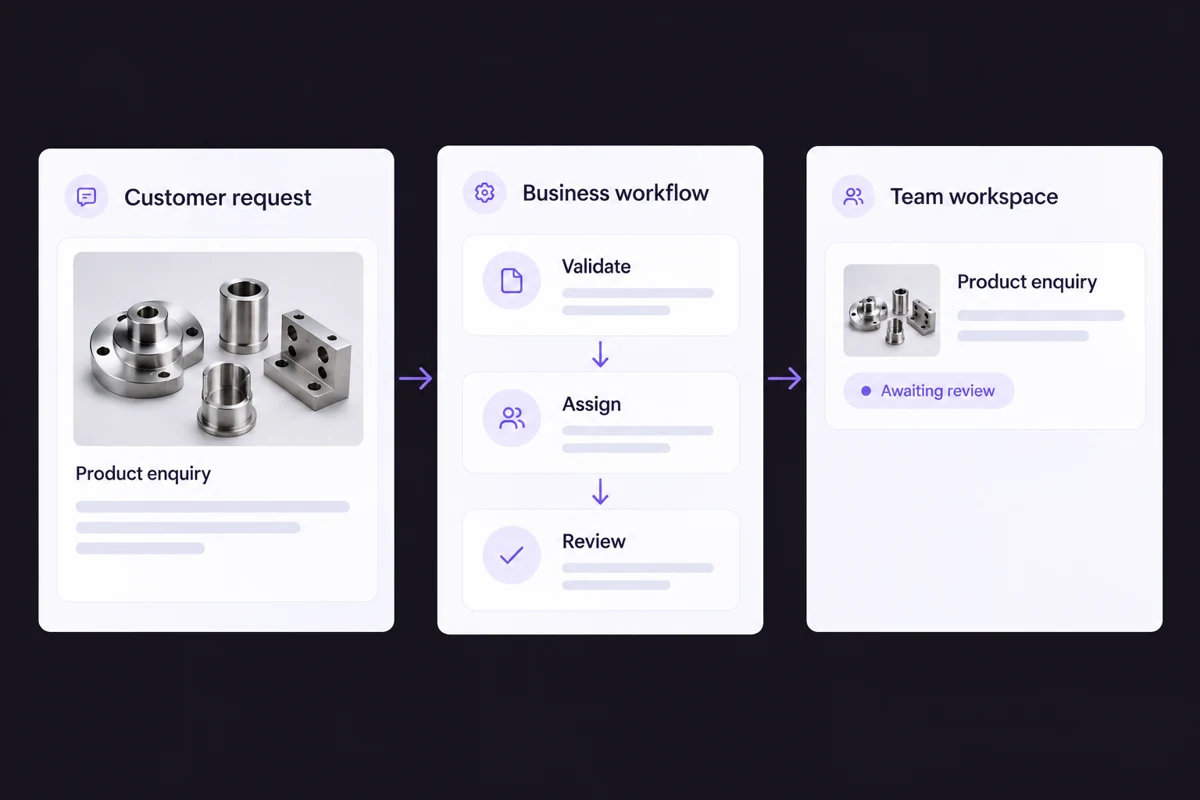
Where needed, a custom web application can connect a customer request to the people and systems responsible for handling it. Define the data, validation, user roles and review steps before building the connection.
For a manufacturer or trader, a product enquiry may need to reach the right team with its product context intact. API access, system compatibility and support requirements are assessed within the agreed scope.
05 / SET EXPECTATIONS EARLY
A defined scope. Clear responsibilities.
Included when agreed
- Discovery, requirements and acceptance criteria
- Sitemap or screen-flow planning and UI design
- Agreed responsive development and content implementation
- Approved data models or integrations where required
- Testing, deployment and handover
Additional or recurring requirements
- Third-party systems, APIs and licence fees
- New functionality after the approved brief
- Data migration, specialist security or compliance work
- Hosting, ongoing technical support and maintenance
06 / PLAN THE INVESTMENT
What determines the cost?
Feature complexity, unique screens, data structures, roles, integrations, migration and testing requirements drive custom-development cost. Ongoing hosting, dependencies and support also need a budget. A detailed brief helps distinguish essential functionality from optional additions.
A useful starting brief
Describe the workflow you need, who will use it, the data involved, current systems and the features essential for the first release.
07 / WEBINNOVATORS
See the work. Discuss the scope.
Explore our portfolio and the website-development hub for selected Webinnovators work. Discuss the design, content and functionality relevant to your brief with our team.
Webinnovators Technologies (OPC Private Limited) is based in Kolkata, India and serves businesses across India and worldwide.
08 / QUESTIONS BEFORE YOU START
Custom development FAQs
When is custom development the right choice?
When specific requirements cannot be met well by a standard website platform. We assess the workflow and constraints first, and can recommend a simpler CMS approach when it fits.
Which technologies will you use?
The stack is chosen after the requirements assessment. Confirmed capabilities include PHP, Node.js, MySQL, Laravel, HTML, CSS and JavaScript; no project automatically needs all of them.
Can you build a web application?
Applicable web-application requirements can be assessed as a custom project. Features, data, access controls, integrations and support must be defined before a delivery commitment.
Can the website connect to an existing system?
Required connections are assessed against the system documentation, access, API limits and security requirements. An integration is included only after feasibility and scope are agreed.
Who will maintain the custom website?
Maintenance responsibilities and any purchased support are agreed before launch. Bespoke code, hosting and third-party dependencies need an explicit ongoing plan.
Can we add more features later?
Later phases can be planned around the architecture and original requirements. New functionality is reviewed and quoted as a separate scope change or project.
09 / LET’S DISCUSS YOUR REQUIREMENTS
Start with the brief. We will help define the next step.
Describe the workflow you need, who will use it, the data involved, current systems and the features essential for the first release.
Prefer to contact us directly?
sales@webinnoovators.com
Visit our contact page →
Discuss Your Custom Project
We use these details to respond to your enquiry. Please do not submit passwords or private customer information. Privacy policy.
CONTINUE PLANNING
Explore the main commercial hub if you are still choosing an approach.
Understand the broader planning and development process.
