

Website Development Services: The Complete Guide Every Business Needs

Over 81% of consumers research a business online before making a purchase decision.[1] That means your website often creates the first impression, and poor development can cost trust, leads, and revenue.
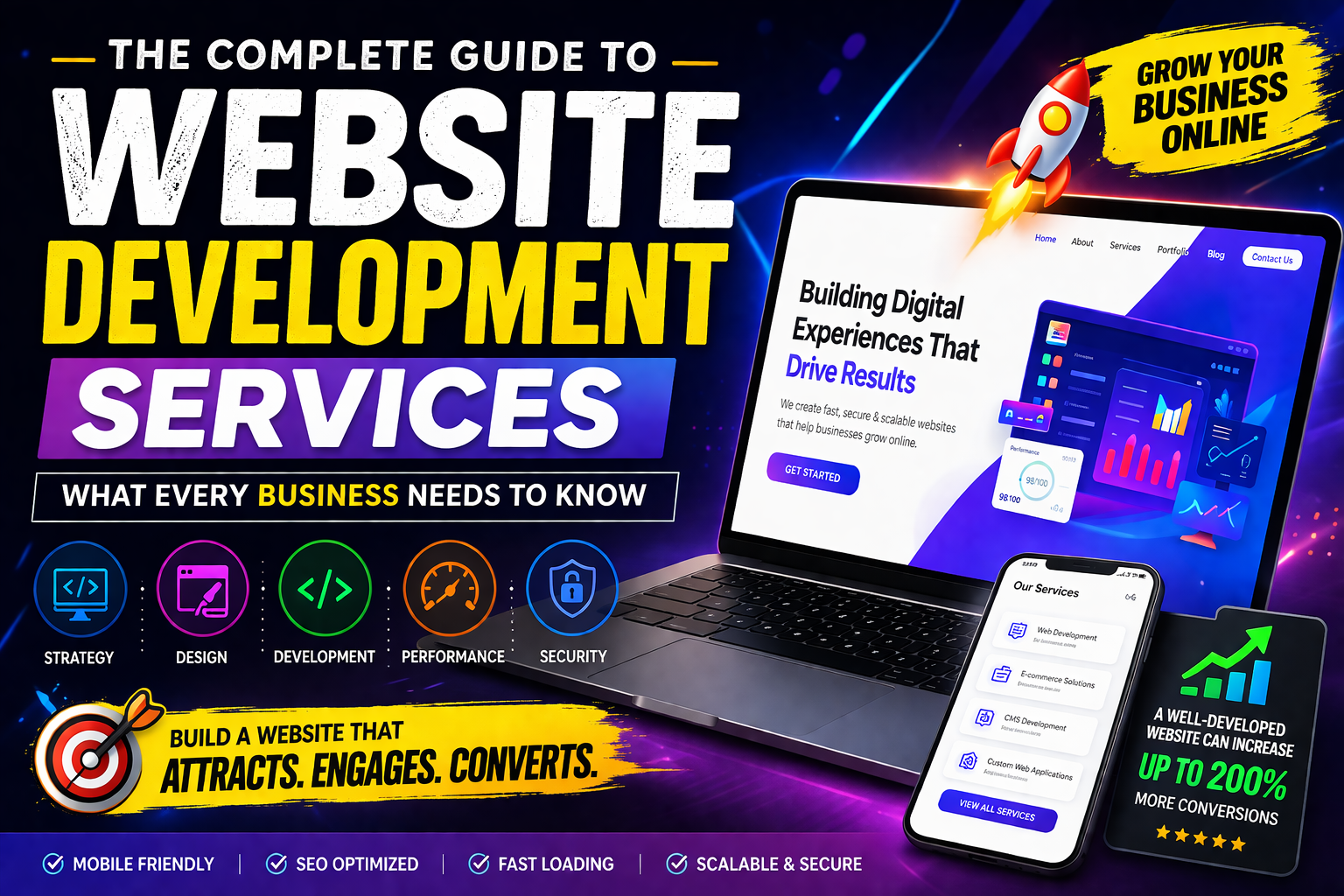
Website development services include the design, build, optimisation, security, and maintenance of websites that help businesses grow online. A professionally developed website supports visibility, credibility, conversions, and long-term scalability.
This guide explains what website development services include, why they matter, how much they cost, and how to choose the right development partner for your business.
Key Takeaways
- Website development services directly affect customer trust, online visibility, and lead generation.
- A strong website improves speed, usability, SEO readiness, and conversion performance.
- The right development approach depends on your goals, budget, and scalability needs.
- Choosing the right website development company reduces long-term risk and costly rebuilds.
- Ongoing maintenance is essential for security, performance, and growth.
| Topic | Details |
|---|---|
| What it covers | Strategy, development types, cost ranges, must-have features, partner selection, SEO architecture, and long-term performance planning |
| Key stat | 88% of users are less likely to return after a poor online experience[2] |
| Best for | Business owners, startups, service companies, e-commerce brands, and decision-makers evaluating website development services |
| Read time | Approximately 20–22 minutes |
Everything decision-makers need before investing in website development services.
- What are website development services?
- Why do website development services matter for business growth?
- What types of website development services are available?
- How much do website development services cost?
- How to choose the right website development company
- What features make a high-performing business website?
- Frequently asked questions
- References
What Are Website Development Services?
Website development services refer to the professional creation, design, coding, deployment, and maintenance of websites that allow businesses to operate effectively online. This usually includes planning, UX strategy, visual design, front-end implementation, back-end functionality, hosting configuration, content setup, performance tuning, technical SEO, security, testing, deployment, and support.
Many companies initially think of a website as a few pages with company information. In reality, a business website is a performance system. It needs to communicate value, load quickly, work on mobile devices, support enquiries, remain secure, and make future updates easy. That is why website development services go far beyond appearance alone.
What Does Website Development Include?
Most professional website development services combine technical and creative components working together. Core areas often include:
- Website design and user interface development
- Front-end and back-end programming
- Database configuration and application logic
- Content management systems such as WordPress or Shopify
- Hosting setup, domain mapping, and SSL configuration
- Performance optimisation for speed and usability
- SEO-friendly architecture, schema, and metadata setup
- Security implementation, access control, and backups
- Testing across browsers, screen sizes, and devices
- Post-launch maintenance and improvements
Each part of this process affects the user experience and the business result. A website that looks polished but performs poorly will still lose leads. A technically solid website without clear structure will still struggle to convert. Strong website development services align both strategy and execution.
Fact block: 88% of online consumers are less likely to return after a bad experience.[2] Poor performance, weak usability, and technical issues directly affect retention and revenue.
Front-End vs Back-End Development Explained

Front-end development focuses on everything users see and interact with. This includes navigation, layouts, buttons, forms, typography, and mobile responsiveness. It shapes how the website feels from the customer’s perspective.
Back-end development handles the behind-the-scenes systems that make the website work. That includes servers, databases, application logic, APIs, secure form handling, user accounts, dashboards, and transaction flows.
High-quality website development services connect both sides smoothly. The front end creates clarity and trust. The back end creates functionality and stability. Businesses need both to deliver a reliable digital experience.
What Makes Professional Website Development Different?
Many businesses start with DIY builders or low-cost solutions because they seem quick and affordable. But once the business needs better SEO architecture, custom functionality, stronger performance, or scalable content structures, limitations appear fast. Professional website development services take a broader approach from the beginning.
- They support custom functionality where needed
- They improve scalability for future expansion
- They use better performance and technical standards
- They strengthen security and maintainability
- They prepare the site for SEO, analytics, and conversion optimisation
That is why many brands eventually invest in professional website development services. A professionally developed website is not just a digital brochure. It becomes a business asset that supports growth, trust, and measurable results.
Reference video selected from YouTube search results for a step-by-step website creation walkthrough.
Watch on YouTube: How to Make a Website | Step by Step [2026].
Website development services combine design, engineering, infrastructure, optimisation, security, and planning to create a business-ready platform that supports visibility, user experience, and long-term growth.
Why Do Website Development Services Matter for Business Growth?
Businesses that treat their website as a strategic asset usually outperform those that treat it as a basic online placeholder. Today, customers research online before they call, enquire, visit, or buy. That means your website often influences the decision before a sales conversation even begins.
Website development services matter because they affect trust, discovery, lead generation, search visibility, and scalability. A professionally developed website helps users find what they need quickly, understand your offer clearly, and take action without friction.
Websites Drive Customer Trust and Credibility
Website quality strongly shapes business credibility. Users often judge a company based on design quality, structure, speed, clarity, and mobile usability. If the website feels outdated or confusing, the brand itself can appear unreliable.
Fact block: 75% of users judge a company’s credibility based on website design.[3] Design quality and structure influence trust before any enquiry happens.
This matters across industries. Service businesses need stronger trust to win enquiries. B2B companies need credibility to support demo requests. Local businesses need a polished online presence to compete effectively. In each case, strong website development services help reduce hesitation and improve first impressions.
Websites Improve Lead Generation and Sales
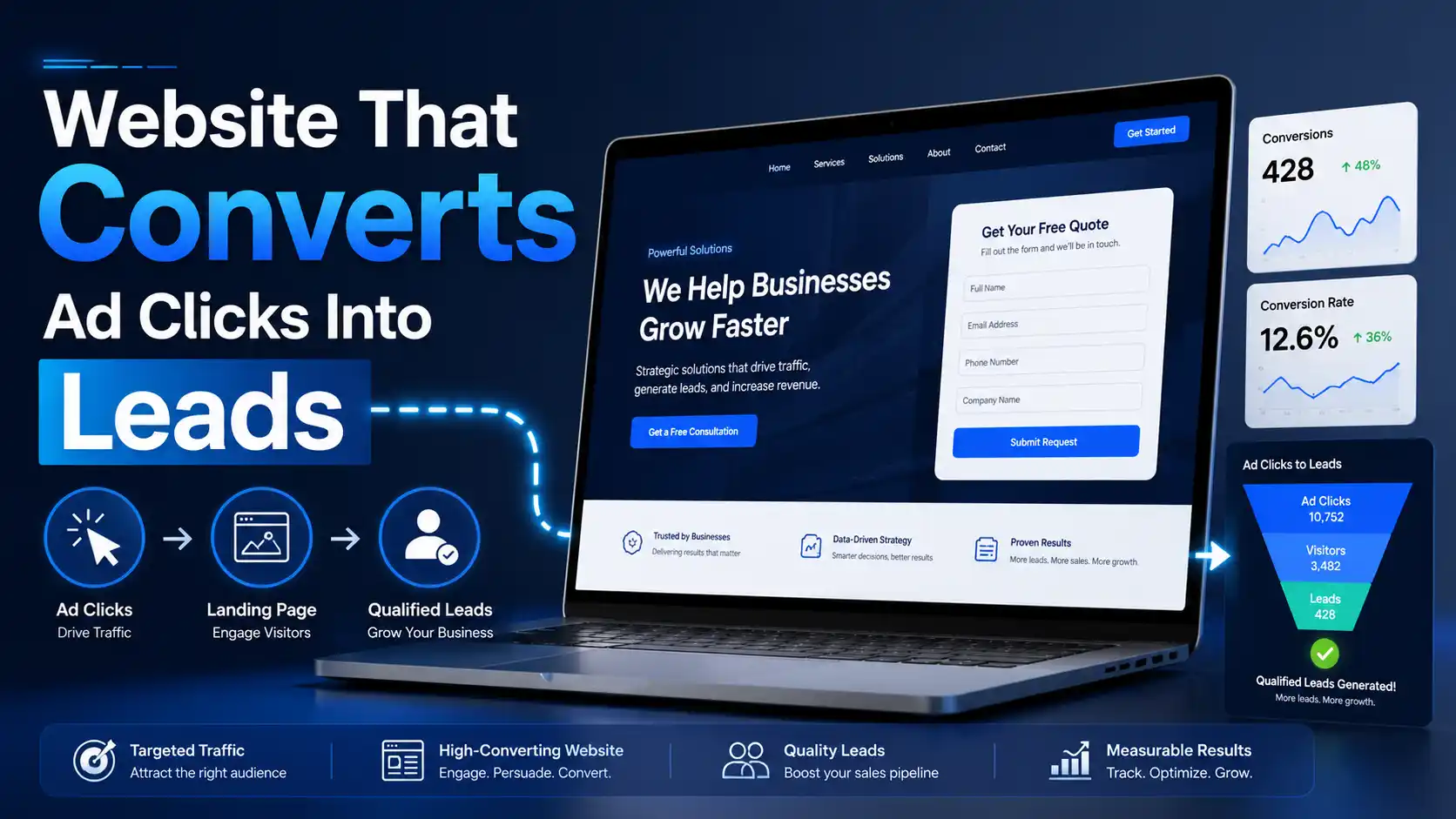
Modern websites do much more than display information. They function as lead-generation systems. Strong website development services help turn traffic into enquiries through landing pages, quote forms, service pages, CTA buttons, and CRM-connected workflows.
- Contact forms capture enquiries consistently
- Landing pages support campaign performance
- CTAs guide users toward the next step
- Service pages answer buyer questions
- Integrations improve follow-up and lead handling
Fact block: 53% of mobile users leave pages that take longer than 3 seconds to load.[4] Slow performance affects both engagement and conversion opportunities.
Websites Support Scalable Growth
A scalable website supports future growth without forcing the business into repeated rebuilds. As companies expand, they often need new service pages, product categories, landing pages, automation tools, and location-focused content. Businesses that invest in structured website development services reduce future redevelopment costs because the foundation is already prepared.
Search performance also plays a role. Google continues to connect mobile readiness and performance with search visibility, which means technical quality directly affects discoverability.[5]
Get a free website audit from Webinnovators Technologies and discover hidden performance issues affecting rankings, speed, usability, and leads.
Website development services directly affect credibility, sales readiness, search visibility, and long-term scalability. A well-built website gives businesses a stronger foundation for growth.
What Types of Website Development Services Are Available?
Not every business needs the same type of website. The right model depends on your goals, content needs, budget, customer journey, and future plans. Understanding the main categories helps decision-makers choose a structure that supports growth without overspending or underbuilding.
Static vs Dynamic Websites: Which One Fits Your Business?
Static websites display fixed content and are best for simple use cases such as brochure sites, landing pages, or small portfolio sites. They can be fast and lightweight, but they are less flexible when ongoing updates or user interaction are needed.
Dynamic websites are more flexible and are usually better for modern businesses. They allow content updates, user interaction, searchable content, service expansion, blog management, and stronger lead-generation functionality.
- Static websites: simple informational pages and limited-use projects
- Dynamic websites: business growth, content updates, lead generation, and scalable structures
Fact block: A large majority of small businesses now maintain a website, which means companies without a capable online presence risk losing visibility to competitors.[6]
E-commerce Website Development Services
E-commerce website development services are designed for online selling. These projects require more advanced functionality because the website must support product catalogues, secure checkout, payment gateways, inventory tracking, customer accounts, and order workflows.
- Product catalogue and category structure
- Payment gateway and checkout integration
- Inventory and order management support
- Customer accounts and dashboards
- Shipping, tax, and promotional logic
For growth-focused brands, e-commerce website development services should be treated as a specialised investment, not a simple extension of a standard brochure site.
Custom Website Development vs CMS-Based Development
Most businesses choose between custom development and CMS-based development. Custom development offers full flexibility and is ideal for advanced workflows, custom portals, and unique feature requirements.
CMS-based development uses platforms such as WordPress, Shopify, or Magento. It is often faster, easier to manage, and more cost-effective while still offering strong scalability for many business use cases.
- Custom development advantages: flexibility, deeper integrations, tailored workflows
- CMS-based advantages: faster launch, easier content management, lower cost
There is no universal answer. The right choice depends on goals, team capacity, timelines, and technical requirements. Businesses comparing options should also explore our website development solutions with long-term scalability in mind.
Website development services range from simple static sites to dynamic business platforms, e-commerce stores, and custom applications. The best structure depends on your business model, growth plans, and operational needs.
How Much Do Website Development Services Cost?
Website development costs vary significantly because different websites solve different business problems. A small informational site does not require the same level of strategy, integrations, or functionality as an e-commerce platform or custom application. Businesses should evaluate pricing in relation to outcomes, not just initial spend.

Typical Website Development Cost Ranges
The ranges below provide a practical pricing framework. Actual costs depend on scope, design depth, integrations, SEO setup, and support requirements.
Website Cost Comparison
| Website Type | Estimated Cost Range | Typical Timeline | Complexity Level |
|---|---|---|---|
| Basic Business Website | ₹15,000 – ₹50,000 | 1–3 weeks | Low |
| Standard Business Website | ₹50,000 – ₹1,50,000 | 3–6 weeks | Medium |
| E-commerce Website | ₹1,50,000 – ₹5,00,000 | 6–10 weeks | High |
| Custom Web Application | ₹5,00,000+ | 10–20 weeks | Very High |
| Enterprise Platform | ₹10,00,000+ | 3–6 months | Advanced |
Cost should always be assessed against business value. A lower-cost website can become expensive later if it leads to poor SEO performance, limited scalability, or weak conversion rates. For tailored pricing, businesses can request a custom website quote based on specific goals and requirements.
Fact block: First impressions are heavily influenced by design and presentation.[7] That is why website development cost should be linked to trust and performance, not just launch expense.
What Drives Website Development Costs?
- Number of pages and content planning needs
- Design complexity and brand customisation
- Custom features and workflow logic
- CRM, ERP, booking, or payment integrations
- SEO architecture, metadata, redirects, and schema
- Hosting environment and deployment requirements
- Testing, QA, and post-launch support
Hidden Costs Businesses Often Overlook
One common mistake is focusing only on launch cost. Websites require ongoing maintenance, updates, and optimisation to remain secure and effective.
- Software and plugin updates
- Security monitoring and backups
- Hosting upgrades as traffic grows
- Performance optimisation
- Landing page additions and content expansion
- Technical SEO improvements over time
Website Development Approaches Comparison
| Criteria | DIY Builder | Freelance Developer | Professional Agency |
|---|---|---|---|
| Cost | Low | Medium | Higher |
| Customisation | Limited | Moderate | Extensive |
| Scalability | Low | Moderate | High |
| Support | Minimal | Variable | Dedicated |
| Security | Basic | Moderate | Advanced |
| SEO Readiness | Limited | Moderate | Professional |
| Best for | Personal or temporary projects | Small or narrow-scope work | Growth-focused businesses |
How to Plan a Website Development Project
- Define business goals
- Identify target audience
- List required features and conversion actions
- Choose the right platform
- Plan content structure
- Set a realistic budget
- Select the right development partner
- Test before launch
- Optimise for SEO and analytics
- Monitor and improve after launch
Reference video selected from YouTube search results for business-focused web pricing guidance.
Watch on YouTube: How Much Does Web Design Cost (2025 Guide).
Businesses working with Webinnovators Technologies have improved online visibility, lead generation, and customer engagement through strategic website development services.
Website development costs depend on scope, functionality, integrations, support needs, and scalability. Businesses should budget for both launch and long-term performance management.
How to Choose the Right Website Development Company
Selecting the right website development company determines whether your site becomes a growth engine or a recurring technical problem. A strong provider does more than create pages. It translates business goals into technical structure, conversion paths, and scalable systems.
What Should You Look for in a Website Development Partner?
- Relevant portfolio with real business examples
- Technical expertise in design, development, SEO, and performance
- Clear process for discovery, revisions, testing, and launch
- Transparent pricing and scope
- Strong communication and responsiveness
- Reliable maintenance and post-launch support
Ask to review live projects rather than only screenshots. Real websites show much more about speed, usability, and structure.
Fact block: Users are unlikely to return to a website they had trouble using or accessing.[8] Technical quality matters well beyond launch day.
Questions to Ask Before Hiring a Website Development Company
- What technologies or platforms do you specialise in?
- Do you build SEO-ready websites from the start?
- How do you optimise for mobile responsiveness and speed?
- What support is available after launch?
- How do you handle updates and security?
- Can our team update content internally?
- What does your testing process include?
- Can you show similar project examples?
Why Local Expertise Still Matters
Local market understanding can improve website strategy. Businesses targeting regional audiences often benefit from working with a team that understands local search behaviour, mobile usage, language preferences, and buyer expectations. That context can help shape better content structure, stronger local SEO support, and more aligned conversion design.
The right website development company combines technical quality, clear communication, strategic thinking, and dependable support. Businesses should evaluate partners by process, portfolio, and long-term value.
What Features Make a High-Performing Business Website?
High-performing websites are not defined by design alone. They combine usability, speed, conversion clarity, SEO readiness, security, and maintainability. A site that looks good but loads slowly or performs badly on mobile is not truly effective.
Mobile Responsiveness and Speed Optimisation

Mobile-first development is essential because a majority of web traffic now comes from mobile devices.[9] Business websites must adapt smoothly to smaller screens, touch behaviour, and varied connection speeds.
Speed optimisation matters just as much. Large images, heavy scripts, poor hosting, and bloated code all slow down performance. That affects bounce rate, trust, and conversion performance.
- Responsive layouts across devices
- Compressed images and smart media loading
- Optimised code and minimized scripts
- Reliable caching and hosting configuration
- Fast form and checkout behaviour
Fact block: Mobile responsiveness and speed directly affect reach, usability, and search visibility. Google also uses the mobile version of content for indexing and ranking.[10]
SEO-Optimised Architecture and Performance

Search engines reward websites that are technically sound and easy to crawl. SEO-ready website development services build this foundation during development, not after launch. That includes structured headings, semantic HTML, clean URLs, schema markup, metadata, mobile-friendly rendering, and internal linking.
- Structured code and semantic hierarchy
- Clean URL architecture
- XML sitemaps and robots guidance
- Schema markup implementation
- Optimised metadata and internal linking
- Logical content structure for authority growth
Businesses can support best practices using authority resources such as Google Search Central, Moz Beginner Guide, HubSpot Blog, and W3C Web Standards.
Reference video selected from YouTube search results for beginner-friendly technical SEO best practices.
Watch on YouTube: Technical SEO Best Practices for Beginners.
Security and Data Protection Features
Security is a core requirement in professional website development services. It protects customer data, business operations, forms, accounts, and trust. A compromised website can damage reputation and disrupt lead flow fast.
- SSL certificates for encrypted communication
- Firewall and threat protection
- Backup automation and recovery systems
- Malware scanning and patch management
- Role-based access control
Content Structure and Conversion Design
High-performing websites also need strong content structure. Users should understand the offer quickly, find the right service pages, and know what action to take next. Good website development services turn content strategy into practical, conversion-focused layouts.
High-performing business websites combine speed, mobile responsiveness, SEO-ready architecture, secure technical foundations, and clear conversion pathways. These elements work together to improve visibility and results.
Frequently Asked Questions
How long does it take to develop a business website?
Most standard business websites take between 2 and 6 weeks depending on complexity, content readiness, feedback cycles, design needs, and required features.
How often should a website be updated?
Technical updates should be handled regularly for security and compatibility, while content should be updated whenever services, offers, case studies, or SEO opportunities change.
What is the difference between web design and web development?
Web design focuses on visual layout and interface presentation, while web development handles coding, integrations, functionality, and technical execution.
Do small businesses need professional website development services?
Yes. Professional website development services improve credibility, mobile usability, search visibility, speed, and lead generation for small businesses.
Can I update my website myself after launch?
Many CMS-based websites allow content updates without coding, but technical changes, security work, and structural improvements are best handled professionally.
What should I prioritise first when planning a new website?
Start with business goals, target audience, required features, content structure, and the main action you want visitors to take.
Conclusion
Businesses that invest in professional website development services gain a measurable advantage in trust, visibility, lead generation, and operational efficiency. A strategically developed website becomes more than an online presence. It becomes a business asset that supports growth.
The difference between growth and stagnation often begins with the strength of your digital foundation. A weak website creates friction, while a strong website builds trust, improves performance, and supports better business outcomes.
Whether you are launching a new site or replacing an outdated one, the right development strategy, platform, and partner will shape your long-term results.
Partner with Webinnovators Technologies to create a high-performing website tailored to your goals, built for growth, and supported for the long term.
References
- GE Capital Retail Bank consumer research reference cited in the introduction regarding online research before purchase decisions.
- Amazon Web Services reference used for the “88% of users won’t return after a poor experience” statistic.
- Stanford Web Credibility Research reference used for the credibility-by-design statistic.
- Google Developers / Page Speed reference used for mobile abandonment and speed-related guidance.
- Google Search Central used for performance, mobile-first, and technical search references.
- Zippia small business website statistics.
- ResearchGate reference cited for first-impression and design influence.
- Google Search / usability reference used for access-friction discussion.
- Statista reference used for mobile traffic share discussion.
- Google Search Central mobile-first indexing documentation.
- HubSpot Blog included as an external authority resource for SEO and content marketing guidance.
- Moz Beginner Guide to SEO included as an external authority resource for SEO architecture reference.
- W3C Web Standards included as an external authority resource for web standards and best practices.
- Hero image source: Wikimedia Commons — Templates in the anatomy of website design.
- Front-end vs back-end image source: Wikimedia Commons — Front-back-end.png.
- Performance graphic source: Wikimedia Commons — Google page speed insights explained.
- Architecture visual source: Wikimedia Commons — Client-server-model.svg.
- SEO visual source: Wikimedia Commons — SEO strategy planning icon.
- YouTube video source: How to Make a Website | Step by Step [2026].
- YouTube video source: How Much Does Web Design Cost (2025 Guide).
- YouTube video source: Technical SEO Best Practices for Beginners.