

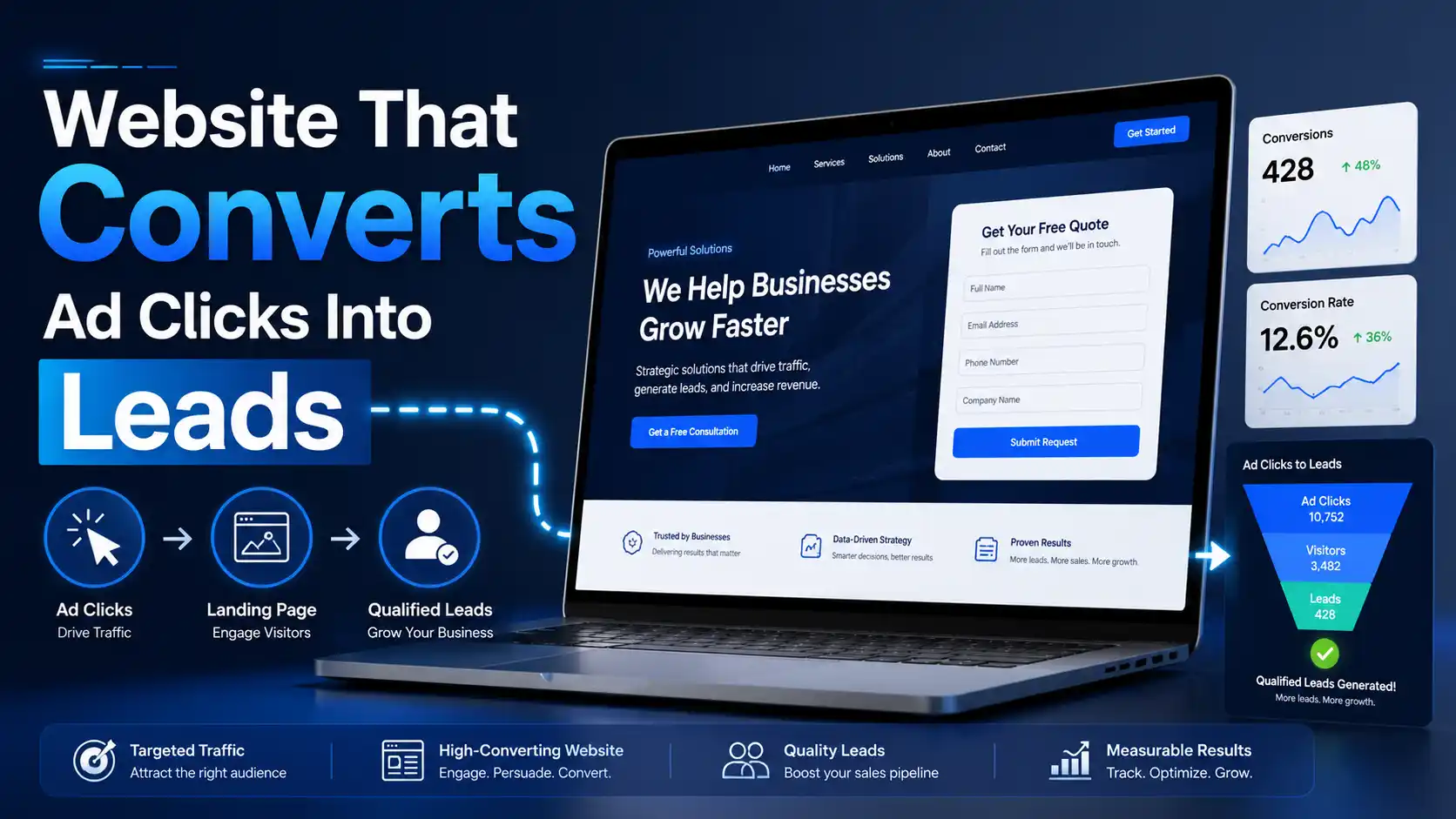
How to Build a Website That Converts Ad Clicks Into Leads
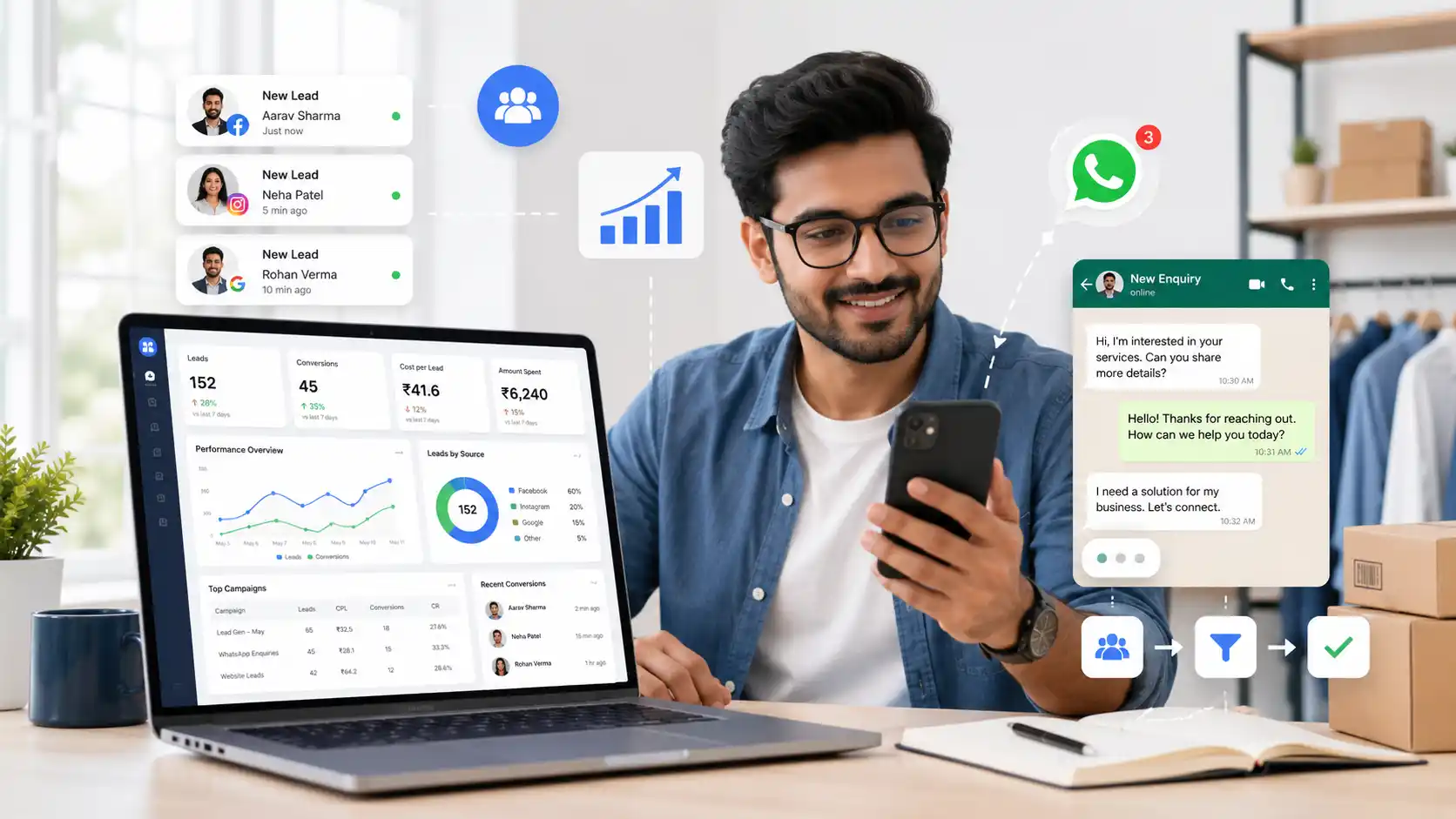
Getting clicks from Meta Ads, Google Ads, or Facebook campaigns is not the same as getting enquiries. This guide explains how to build a website or landing page that turns paid traffic into real calls, WhatsApp messages, forms, bookings, and sales conversations.
You launched an ad campaign. People clicked. The budget started spending. But the phone did not ring enough, the WhatsApp enquiries were weak, and the contact form stayed almost empty.
This is where many business owners feel confused. They think the ad failed, but often the real problem is what happens after the click. Ads create attention. Your website, landing page, offer, CTA, trust signals, speed, tracking, and follow-up system convert that attention into action.
A website that converts ad clicks into leads is not just a nice-looking website. It is a structured conversion system that helps visitors understand your offer quickly, trust your business, and take the next step without confusion.
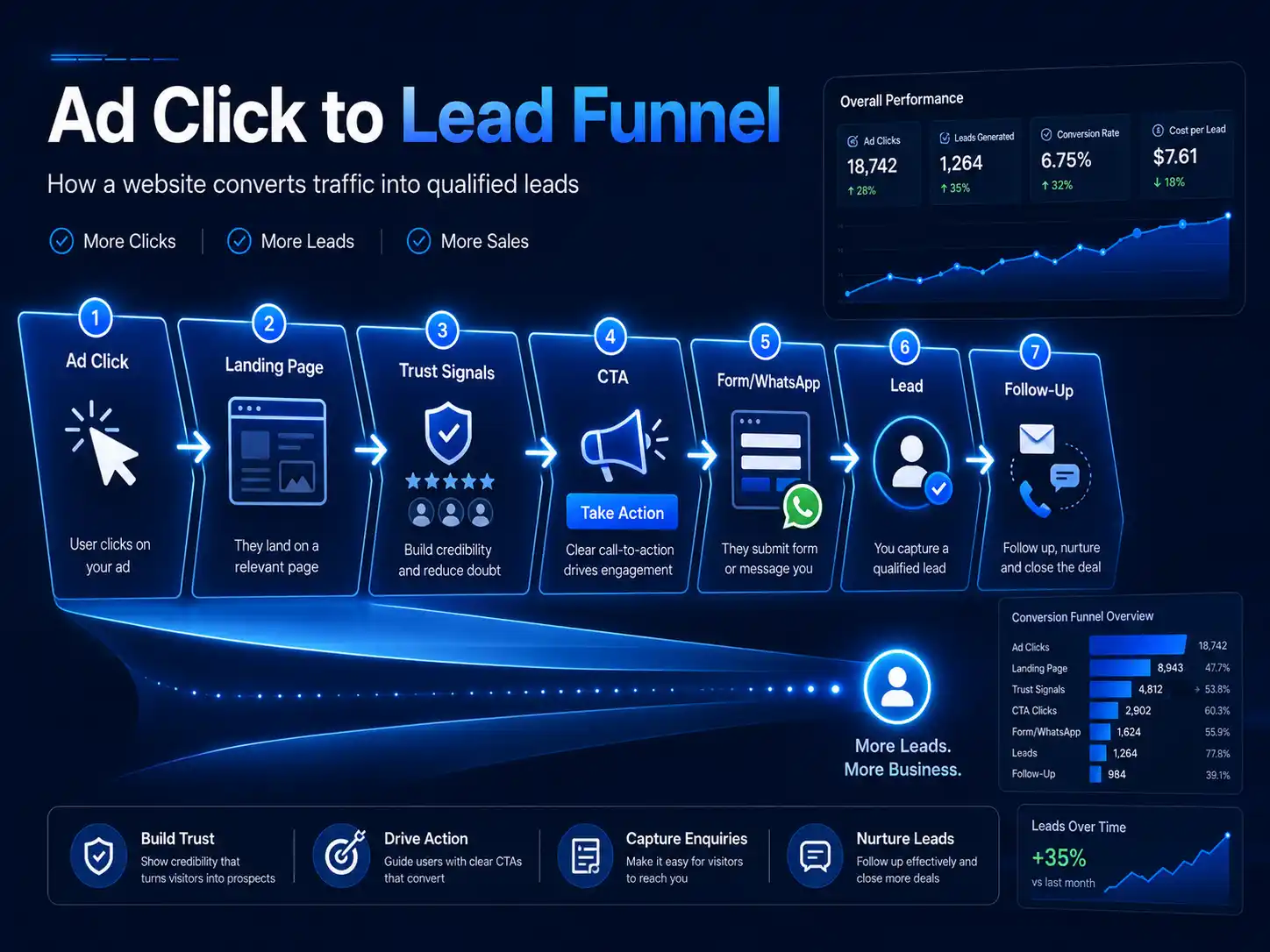
Why Your Ad Clicks Are Not Turning Into Leads
A click means someone was interested enough to visit. It does not mean they were ready to buy, call, fill out a form, or trust your business immediately. That is why businesses need to understand the difference between traffic and conversion.
Clicks vs Visitors vs Leads vs Customers
A click is when someone taps your ad. A visitor is someone who lands on your page. A lead is someone who takes a valuable action such as calling, filling out a form, sending a WhatsApp message, booking a consultation, or downloading a brochure. A qualified lead matches your service, budget, location, and intent. A customer is someone who finally buys.
Many campaigns fail because businesses only focus on clicks and ignore the visitor journey after the click. A weak page can waste good traffic. A strong page can make the same traffic more valuable.
Common Reasons Paid Traffic Does Not Convert
- The ad promises one thing, but the website says something different.
- The visitor lands on a generic homepage instead of a campaign-specific landing page.
- The first screen does not explain the offer clearly.
- The website is slow, cluttered, or hard to use on mobile.
- The CTA is weak, hidden, or confusing.
- The form is too long or asks for too much information too early.
- There are no reviews, testimonials, case studies, or contact details.
- There is no tracking, so the business cannot see what is working.
- Leads are not followed up quickly after submission.
What Is a Website That Converts Ad Clicks Into Leads?
A lead-generating website is a website designed to turn visitors into enquiries. It is not only built for appearance. It is planned around the user’s intent, offer clarity, trust, mobile experience, CTA placement, form design, analytics, and follow-up.
A conversion-focused website helps visitors answer three simple questions:
- Is this service relevant to my problem?
- Can I trust this business?
- What is the easiest next step?
For example, if a clinic runs Google Ads for “dentist appointment in Berhampore,” the visitor should not land on a general homepage with no appointment button. They should land on a focused appointment page with services, doctor details, location, reviews, WhatsApp button, and booking form.
Website vs Landing Page: Which One Is Better for Ads?
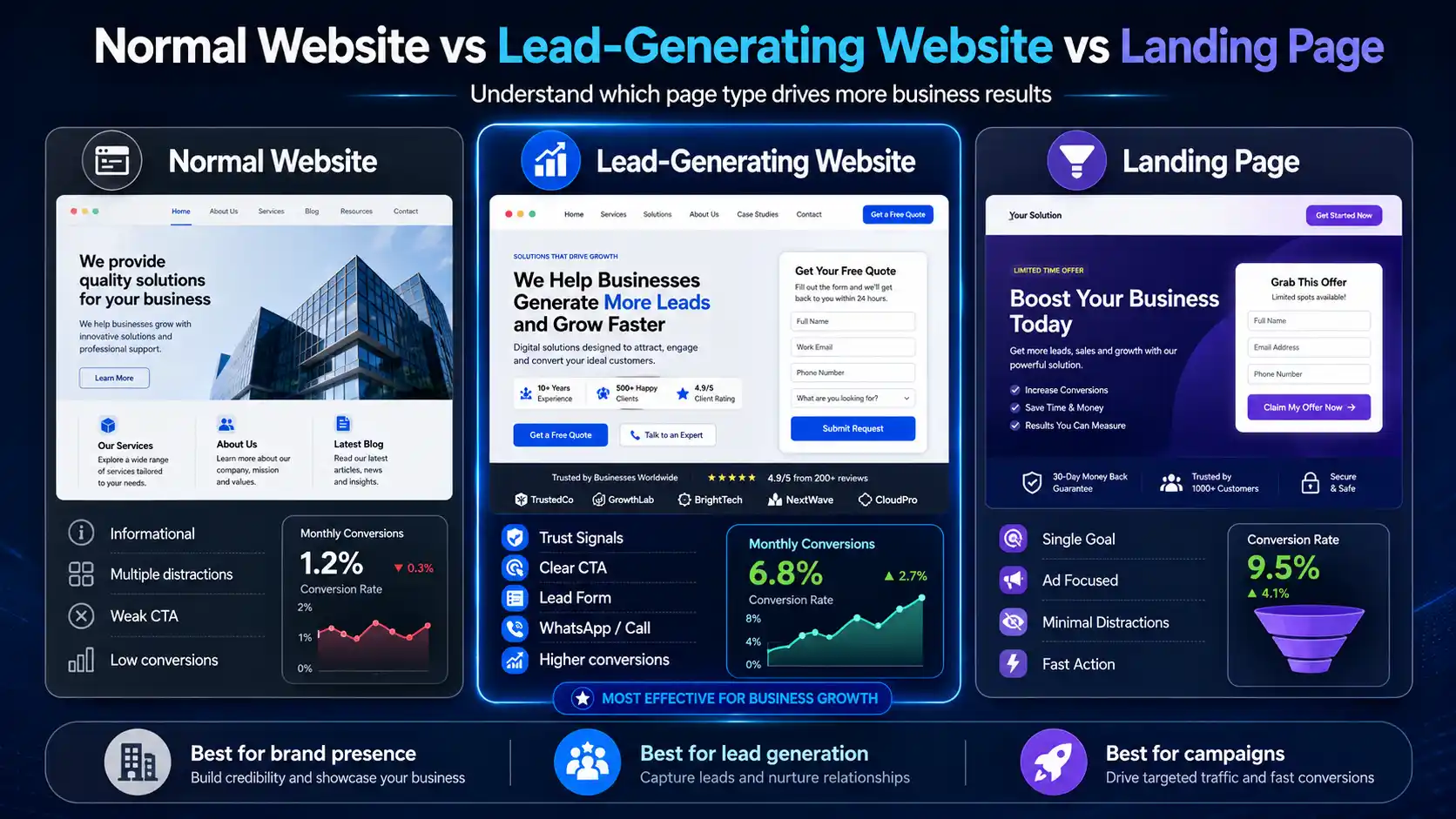
A full website and a dedicated landing page can both generate leads, but they are not used in the same way. A website is better for brand trust, service discovery, SEO, and long-term presence. A landing page is better for a specific campaign, offer, audience, or location.
| Feature | Normal Website | Lead-Generating Website | Dedicated Landing Page |
|---|---|---|---|
| Main purpose | General information and brand presence | Convert visitors into enquiries | Convert traffic from one campaign |
| Best for | Businesses that need online credibility | Service businesses, local brands, startups, agencies | Meta Ads, Google Ads, offers, launches, location campaigns |
| CTA clarity | Often mixed or unclear | Clear CTAs across important sections | One focused primary CTA |
| Ad message match | Usually weak | Good if campaign sections are planned | Strongest when built for the ad |
| Distractions | More navigation and links | Controlled navigation and focused sections | Minimal distractions |
| Tracking | Basic analytics | Form, WhatsApp, call, CTA, and thank-you tracking | Campaign-specific conversion tracking |
| Conversion potential | Low to medium | Medium to high | High for specific campaigns |
| Recommended use | Brand foundation | Main business growth website | Paid ads and focused lead generation campaigns |
Match the Website Message With the Ad Promise
Message match means the visitor sees the same promise on the page that made them click the ad. This is one of the most important parts of landing page optimization.
If your ad says “Get a free website consultation,” your landing page headline should not say “Welcome to our company.” It should say something closer to “Get a Free Website Consultation for Your Business.” That simple consistency tells visitors they are in the right place.
Good Message Match Includes
- Headline aligned with the ad creative or search keyword.
- Offer explained clearly in the first screen.
- Same location, service, or audience mentioned in the ad.
- Visuals that support the ad promise.
- CTA that continues the same action promised in the ad.
The Above-the-Fold Section Must Answer 4 Questions
The above-the-fold section is the first part visitors see before scrolling. For paid ads, this section carries heavy responsibility because visitors decide very quickly whether to stay or leave.
1. What Do You Offer?
Say the service clearly. Avoid vague headlines like “We help you grow.” Instead, use clear language such as “Conversion-Focused Website Development for Small Businesses.”
2. Who Is It For?
Identify the audience. For example: “For clinics, restaurants, real estate businesses, coaches, consultants, and local service providers.”
3. Why Should the Visitor Trust You?
Add proof near the top: reviews, client results, years of experience, business registration, project examples, or a short credibility statement.
4. What Should They Do Next?
Make the action obvious. Use one main CTA such as “Get a Free Consultation,” “Request a Callback,” “Get Quote on WhatsApp,” or “Book an Appointment.”
Use Strong CTAs That Make the Next Step Obvious
A CTA is not just a button. It is the instruction that tells the visitor what to do next. Weak CTAs like “Submit” or “Click Here” do not explain the benefit. Strong CTAs connect the button to the visitor’s goal.
Examples of Better CTA Buttons
- Get a Free Website Consultation
- Request a Callback
- Get Quote on WhatsApp
- Book a Free Strategy Call
- View Website Packages
- Download Project Brochure
- Check Availability
For local businesses in India, call and WhatsApp CTAs often work well because many users prefer quick conversation instead of long forms. A WhatsApp lead generation website can be especially useful for restaurants, clinics, salons, real estate projects, local services, and coaching businesses.
Build Forms That People Actually Complete
A form should feel easy. If the visitor is only asking for a callback, you usually do not need ten fields. Every extra field can create hesitation.
Lead Capture Form Optimization Tips
- Ask only for essential details: name, phone, service, and message.
- Use mobile-friendly input sizes and labels.
- Offer WhatsApp as an alternative to the form.
- Use multi-step forms if you need more information.
- Make the button specific, such as “Request My Callback.”
- Show privacy reassurance near the form.
- Redirect users to a thank-you page after form submission.
A good form does not only collect data. It reduces friction, builds confidence, and helps the sales team understand the enquiry.
Add Trust Signals Before Asking for the Lead
Visitors from ads may not know you yet. Before they share their phone number or email, they need reasons to trust your business.
Trust Signals That Help Conversions
- Customer reviews and testimonials.
- Case studies or before-after examples.
- Client logos or industry experience.
- Real business address, phone number, and WhatsApp details.
- Founder or team introduction.
- Business registration details where relevant.
- Transparent pricing or starting package information.
- FAQs that answer objections before the form.
- Guarantee clarity without fake promises.
Trust signals should appear before important CTAs and forms, not only at the bottom of the page.
Make the Website Fast and Mobile-Friendly
Paid ad visitors often come from mobile devices. If the website loads slowly, uses tiny text, has buttons too close together, or hides the CTA, users may leave before they understand the offer.
Use PageSpeed Insights to check how your page performs on mobile and desktop. Speed, clean spacing, readable typography, and visible CTAs are especially important for paid traffic.
Mobile UX Checklist
- Fast loading hero section.
- Readable font size.
- Sticky call or WhatsApp button.
- Simple layout with enough spacing.
- Compressed and properly sized images.
- Short forms that are easy to fill on phone.
- CTA visible without excessive scrolling.
Use Tracking Before Scaling Ads
Without tracking, you may know how many people clicked your ad, but you may not know which campaign generated calls, WhatsApp clicks, form submissions, quote requests, bookings, or purchases.
Google Analytics 4 can measure useful website events, Google Tag Manager can deploy and manage tracking tags, Google Ads conversion tracking measures valuable actions after ad interactions, and Meta Pixel helps track actions people take on your website after seeing or clicking Meta ads.
Important Actions to Track
- Form submissions.
- WhatsApp button clicks.
- Phone number clicks.
- Booking button clicks.
- Quote request clicks.
- Brochure downloads.
- Thank-you page visits.
- Important scroll depth or section engagement.
Tracking helps you stop guessing. It shows which ads, landing pages, keywords, audiences, and offers are producing real leads.
Connect the Website With Follow-Up Automation
Lead generation does not end when someone fills out a form. Many businesses lose leads because they respond too late or forget to follow up.
A strong lead generation website should connect the enquiry to your follow-up process. This can include instant email notifications, WhatsApp alerts, CRM entry, Google Sheets logging, reminder tasks, and automated follow-up messages.
Useful Follow-Up Automation Ideas
- Send every form lead to email and WhatsApp instantly.
- Store leads in Google Sheets or CRM.
- Send an automated confirmation message to the user.
- Create reminders for missed leads.
- Segment leads by service, location, or budget.
- Trigger different follow-up messages based on enquiry type.
Step-by-Step Process to Build a Website That Converts Ad Clicks Into Leads
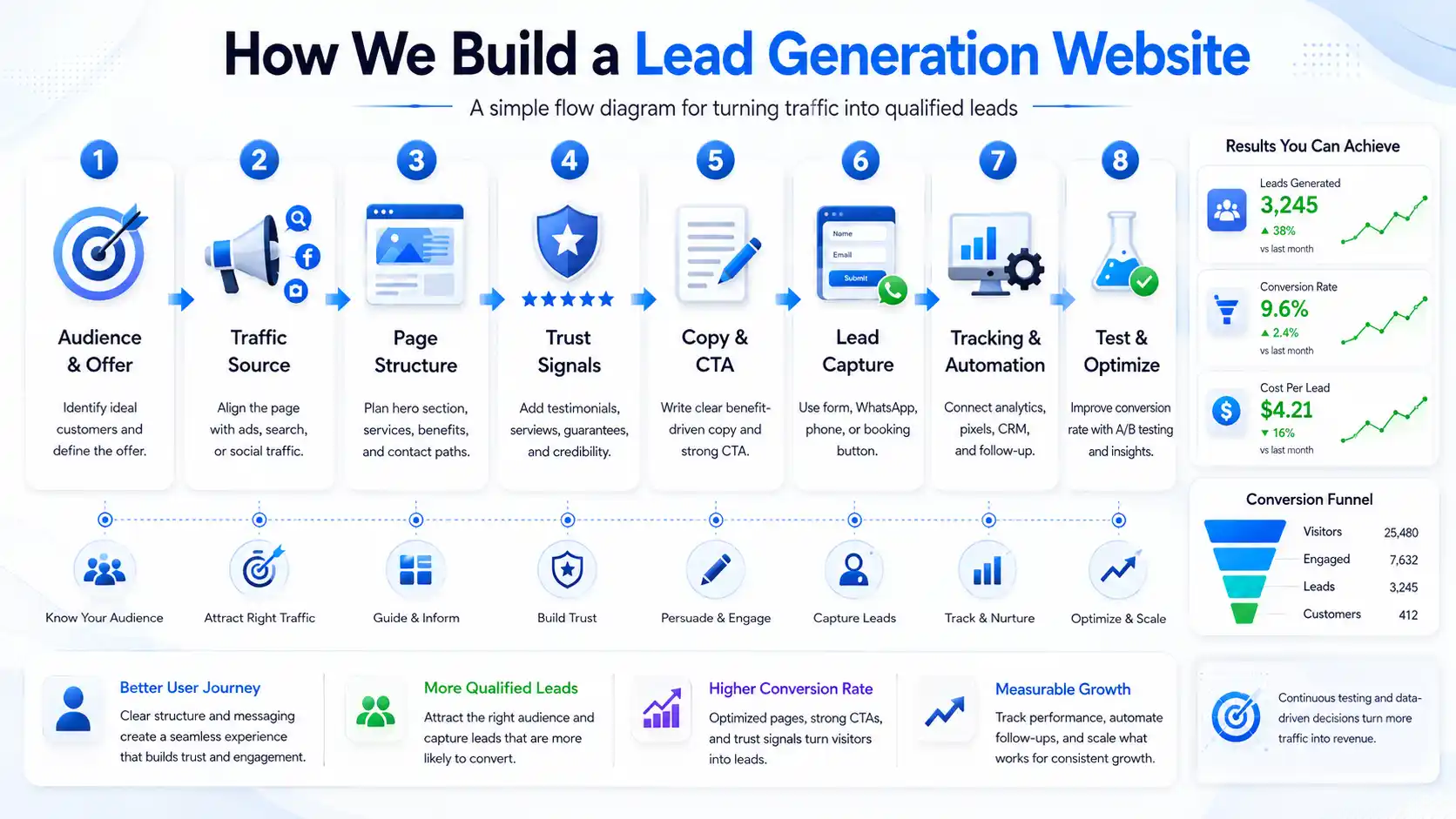
Define the Campaign Goal
Decide whether you want calls, WhatsApp enquiries, form submissions, bookings, quote requests, brochure downloads, or product sales.
Understand the Audience Intent
A Google Ads visitor may be actively searching, while a Meta Ads visitor may be discovering your offer. The page should match the intent level.
Create a Specific Offer
A clear offer converts better than a vague service page. Examples include free consultation, appointment booking, site audit, demo, quote, or package enquiry.
Match the Landing Page Headline With the Ad
The visitor should immediately feel that they landed on the correct page.
Build a Strong Above-the-Fold Section
Include headline, benefit, audience, proof, CTA, and a relevant visual.
Add Trust Signals
Use reviews, testimonials, results, case studies, real contact details, and FAQs before asking for the lead.
Use Short Forms and WhatsApp CTA
Make the next step easy. For many Indian local businesses, WhatsApp and call buttons can reduce friction.
Optimize for Mobile Speed
Compress images, reduce heavy scripts, keep text readable, and make CTAs thumb-friendly.
Set Up Tracking
Track forms, calls, WhatsApp clicks, thank-you pages, and key CTA clicks before increasing ad spend.
Connect Follow-Up Automation
Send leads to your team quickly and create reminders so enquiries are not missed.
Test and Improve Continuously
Improve headlines, forms, CTAs, proof sections, offer clarity, and page speed based on real data.
Common Mistakes That Waste Ad Budget
Even a good campaign can fail when the landing experience is weak. Avoid these mistakes before scaling your Meta Ads or Google Ads budget.
- Sending paid traffic to a weak homepage.
- Using the same page for every campaign.
- Having no clear CTA above the fold.
- Using long or confusing forms.
- Not showing pricing, offer, value, or process clearly.
- Not adding reviews, testimonials, or proof.
- Using slow-loading mobile pages.
- Not setting up conversion tracking.
- Not using a thank-you page.
- Not offering WhatsApp or call options.
- Not following up after the lead arrives.
- Designing only for beauty, not conversions.
Real-World Examples
Clinic Running Google Ads
Problem: The ad says “Book Dentist Appointment in Berhampore,” but the visitor lands on a general homepage.
Better solution: Send users to a dental appointment landing page with doctor details, location, treatment list, reviews, WhatsApp button, and appointment form.
Real Estate Business Running Meta Ads
Problem: The ad promotes a specific project, but the website sends users to a generic listing page.
Better solution: Create a dedicated project page with price range, location, amenities, gallery, brochure download, enquiry form, and call CTA.
Service Business Running Facebook Ads
Problem: The ad promises a free consultation, but the website has no visible form or WhatsApp button.
Better solution: Add a visible consultation CTA, short form, testimonial section, and automated response.
Ecommerce Store Running Paid Ads
Problem: The ad sends users to a slow product page with unclear pricing and no trust proof.
Better solution: Improve product page speed, add reviews, clear delivery information, return policy, strong product images, and checkout tracking.
Restaurant Promoting Offers
Problem: The ad promotes a weekend offer, but the page does not show menu, location, timing, or booking CTA clearly.
Better solution: Create an offer page with menu highlights, location map, WhatsApp booking, phone button, reviews, and urgency.
Website Development Agency
Problem: The ad says “Get a business website,” but the page only shows generic company details.
Better solution: Use a page with package clarity, portfolio, process, FAQs, lead form, WhatsApp CTA, and trust-focused copy.
How Webinnovators Builds Conversion-Focused Websites
Webinnovators builds websites and landing pages for businesses that want more than a good-looking design. The goal is to create a website structure that supports enquiries, calls, WhatsApp conversations, bookings, and measurable campaign performance.
Webinnovators’ Lead-Focused Approach
- Strategy-first planning based on campaign goal and audience intent.
- Website structure designed around user decisions.
- Landing page copy that matches the ad promise.
- Mobile-first design for paid traffic visitors.
- SEO-ready heading, content, and page structure.
- CTA planning for forms, calls, WhatsApp, and bookings.
- Tracking setup for important lead actions.
- Speed optimization and clean user experience.
- Digital marketing funnel support for Meta Ads, Google Ads, and follow-up automation.
Businesses that need website development services should think beyond design. The real question is: can the website clearly explain the offer, build trust, and help visitors take action?
FAQ: Website That Converts Ad Clicks Into Leads
What is a lead-generating website?
A lead-generating website is designed to turn visitors into enquiries, calls, bookings, WhatsApp messages, or form submissions. It uses clear messaging, strong CTAs, short forms, trust signals, mobile-friendly design, and tracking.
Why are my ad clicks not converting into leads?
Your ad clicks may not convert because the landing page is unclear, slow, not mobile-friendly, missing CTAs, lacking trust signals, using long forms, or not matching the ad promise.
Should I send ad traffic to my homepage or landing page?
For serious paid campaigns, a dedicated landing page usually works better because it can match the ad message, focus on one offer, reduce distractions, and track campaign-specific conversions.
What should a landing page include for lead generation?
A lead generation landing page should include a clear headline, offer, benefits, trust proof, CTA buttons, short form, WhatsApp or call option, FAQs, mobile-friendly layout, and conversion tracking.
How many CTAs should a lead generation website have?
A lead generation website can have multiple CTA placements, but each section should focus on one primary action. Too many different actions can confuse visitors.
Are WhatsApp buttons good for lead generation?
Yes. WhatsApp buttons are useful for local businesses, service providers, clinics, restaurants, real estate businesses, and Indian small businesses because they make enquiry quick and familiar.
How do I track leads from my website?
You can track website leads using GA4, Google Tag Manager, Google Ads conversion tracking, Meta Pixel, thank-you pages, phone click tracking, WhatsApp click tracking, and form submission events.
What is a good conversion rate for paid ad landing pages?
A good conversion rate depends on industry, offer, traffic source, lead quality, pricing, and audience intent. Instead of chasing a universal number, compare your page against its own past performance and improve step by step.
Do I need a separate landing page for every ad campaign?
You do not always need a separate page for every small campaign, but important campaigns should have dedicated pages for specific offers, services, audiences, locations, or products.
How can small businesses improve website lead generation?
Small businesses can improve lead generation by clarifying the offer, adding visible CTAs, using WhatsApp and call buttons, reducing form fields, adding reviews, improving mobile speed, and tracking every enquiry action.
What is better for Google Ads: website or landing page?
A dedicated landing page is usually better for Google Ads when the campaign targets a specific keyword, service, offer, or location. A full website is still important for brand trust and long-term SEO presence.
Can Webinnovators build a website that generates leads?
Yes. Webinnovators builds fast, mobile-friendly, conversion-focused websites and landing pages with CTA planning, SEO-ready structure, WhatsApp and form integration, tracking setup, and lead-focused digital marketing support.
Final Conclusion
Clicks are only the first step. A business needs a website or landing page that explains the offer clearly, builds trust, loads fast, captures leads easily, tracks important actions, and supports quick follow-up.
A conversion-focused website helps you get more value from your ad budget because it connects the full journey: ad promise, page message, CTA, form or WhatsApp, tracking, and follow-up.
If you are spending money on Meta Ads, Google Ads, or any paid campaign, do not treat your website as an afterthought. Treat it as the conversion engine behind your marketing.
Want a Website That Turns Ad Clicks Into Real Business Enquiries?
Webinnovators builds fast, mobile-friendly, conversion-focused websites and landing pages for small businesses, startups, and local brands. Get a website designed for leads, not just looks.
Editorial note: This article is written for business owners and decision-makers. It does not guarantee rankings, sales, leads, ROAS, or revenue. Actual results depend on offer quality, market demand, ad targeting, website experience, tracking setup, follow-up process, and ongoing optimization.